Wildlife
A working wetlands pond
Park Lake is small, forested, and private — which is exactly why kingfishers, beavers, herons, and chorus frogs still use it.
Park Lake is a small forested wetland, not a lawn pond. The species below are the ones that belong here in the Puget Sound lowlands — kingfishers on snags, beaver in the west shallows, herons in the north coves, wood ducks at first light, red-winged blackbirds in the cattails. The list will grow as owners add dated notes.
Year-round
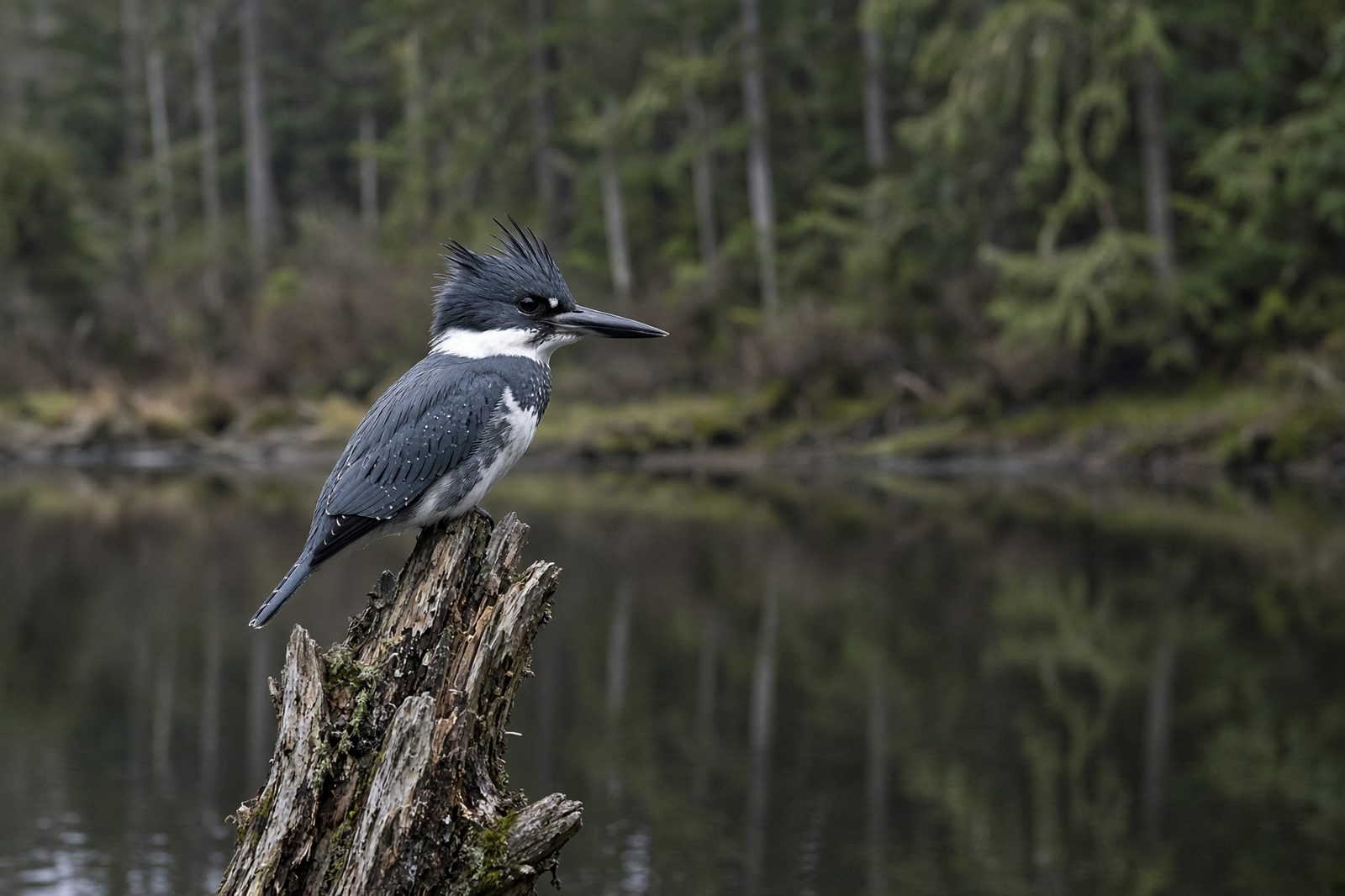
Belted kingfisher
Megaceryle alcyon
The bird that belongs on this site’s masthead. Kingfishers hunt Park Lake from standing snags, rattling as they move the shoreline circuit.
Most visible in late summer
- Slate-blue crest, white collar, dagger bill. Females show a rust belly band.
- They need clear dives and perches. Standing dead wood over water is habitat, not debris.
- Nests are burrows in steep earthen banks. If a bank on the pond is being used, give it a wide berth in spring.
- A collapse in kingfisher use is often a water-quality or fish-forage story, not a mystery.
Resident, some years more obvious than others
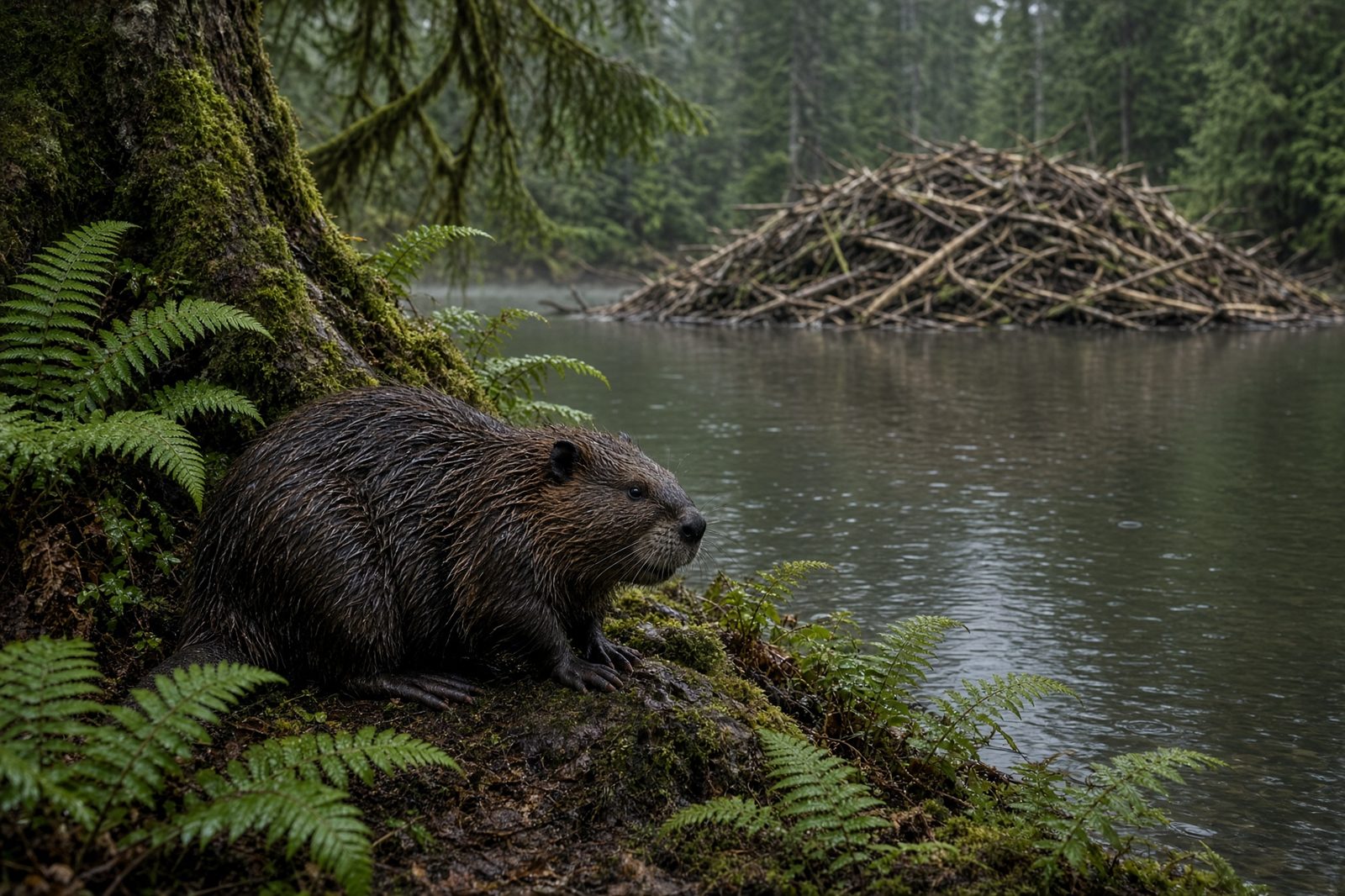
American beaver
Castor canadensis
Beavers are native wetland engineers. On a pond this size they can raise water, build lodges, and reset the shoreline in a single season.
Cuttings most visible in spring and fall
- Look for peeled sticks, fresh-cut alder and willow, scent mounds, and a lodge of mud and wood.
- Default stewardship is coexistence: wrap ornamental trees, leave a forage buffer, talk before anyone traps.
- WDFW is the agency of first call if a conflict cannot be lived with. Removal is a last resort and a decision for all thirteen owners.
- Beaver water is kingfisher water, frog water, and duck water. A “tidier” pond is usually a poorer one.
Regular visitor
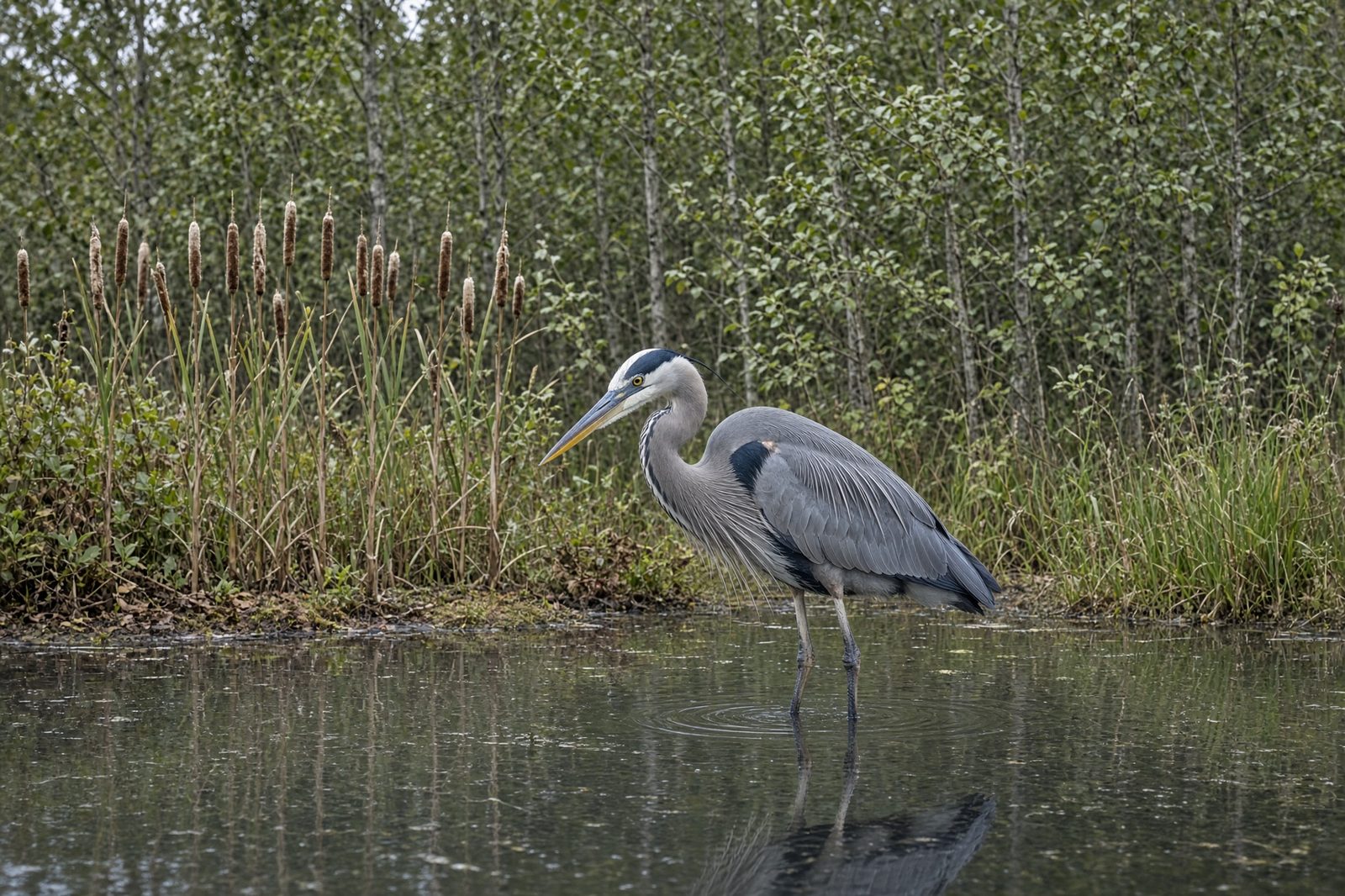
Great blue heron
Ardea herodias
A patient hunter of the north and east shallows. One bird can work the pond for an hour without moving more than a few steps.
Still mornings, year-round
- Do not flush a hunting heron for a photograph. The pond is small; the bird has nowhere cheap to go.
- Herons take fish, frogs, and small mammals. Their presence is a sign the shallows still function.
- Regional nesting is in colonies (heronries), usually off-site in mature trees.
Seasonal, with nesting possible
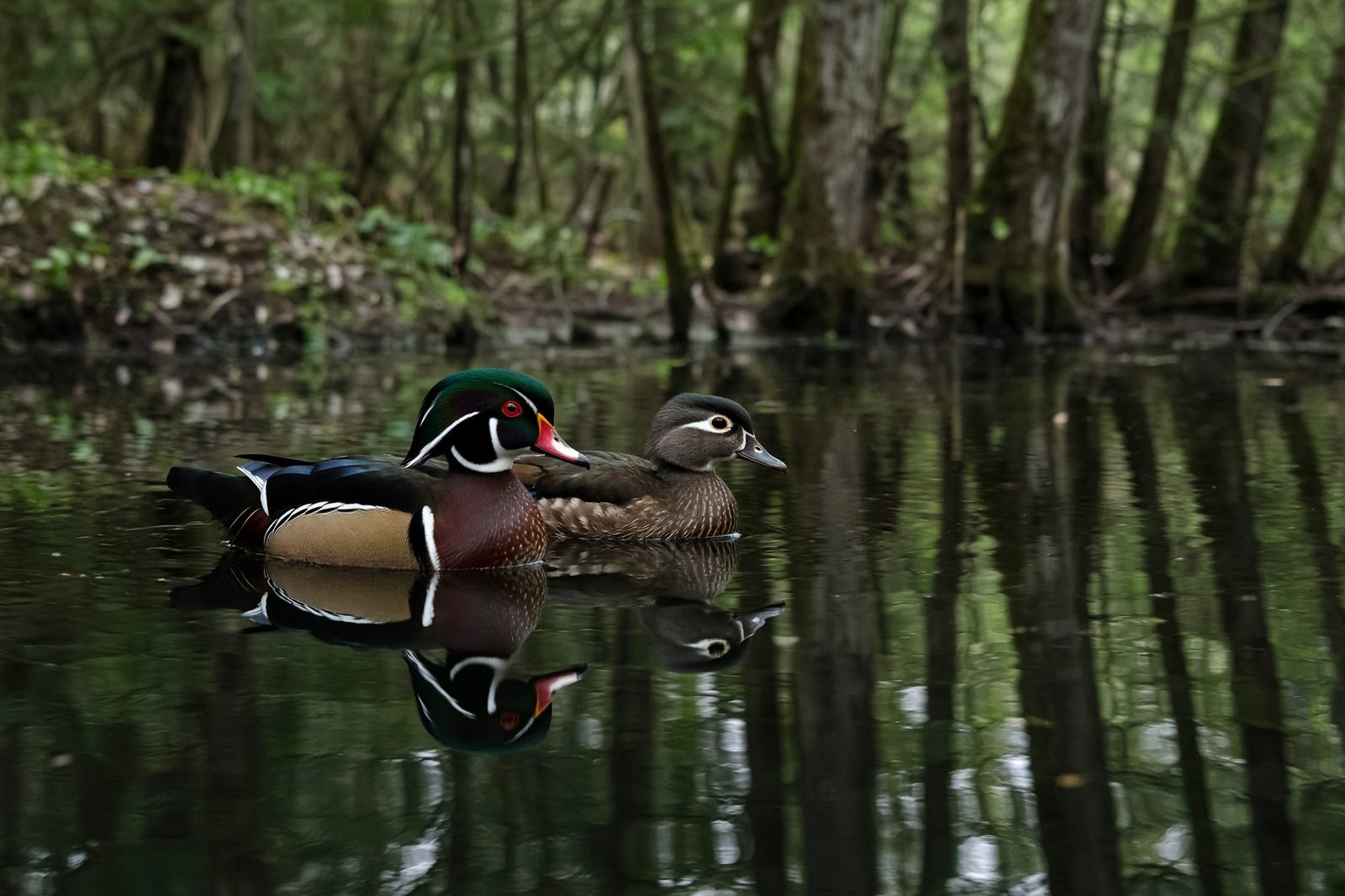
Wood duck
Aix sponsa
Cavity nesters of wooded ponds. A pair on Park Lake at first light is one of the better reasons to walk down before coffee.
Spring through fall; some winter
- They nest in tree cavities and will use well-placed nest boxes if boxes are monitored.
- Keep dogs out of the vegetated edge in late spring. Broods use the cover.
- Mallards use the pond as well; wood ducks are the ones that look carved.
Heard more often than seen
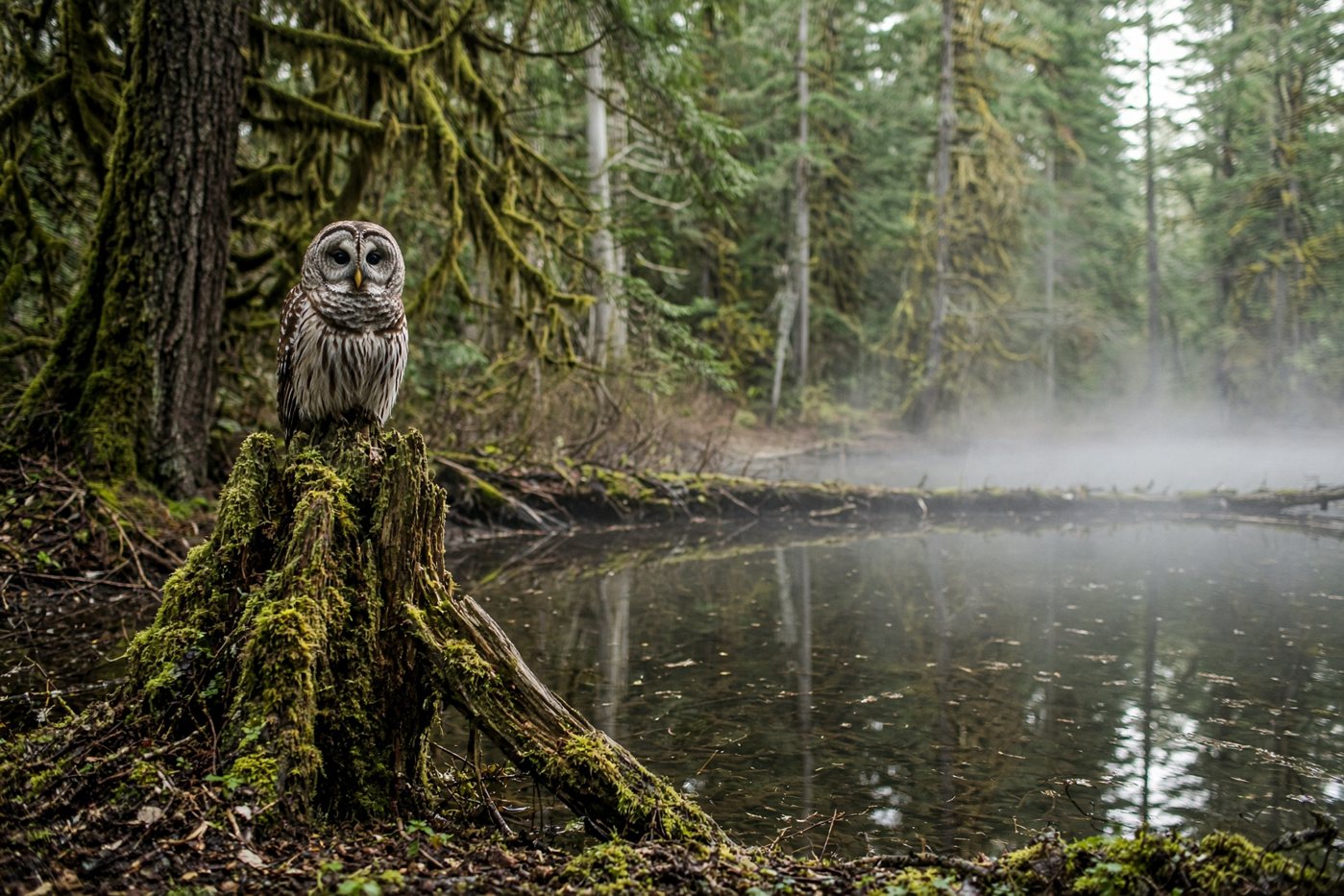
Barred owl
Strix varia
A forest owl of the cedar edge. At dusk the call carries over Park Lake — the familiar “who cooks for you” — long before anyone sees the bird.
Year-round; most vocal late winter and spring
- Round head, no ear tufts, dark eyes, and a chest barred crosswise in brown and white. That pattern is the name.
- They hunt from low perches along the shore: mice, voles, frogs, and the occasional crayfish. Standing snags are useful to them too.
- Do not approach a calling bird in spring. A nest or a roost in the woods should be left alone.
- Rodent poison on the lots around the pond does not stay on the lots. An owl that takes a poisoned mouse is the cost.
Resident
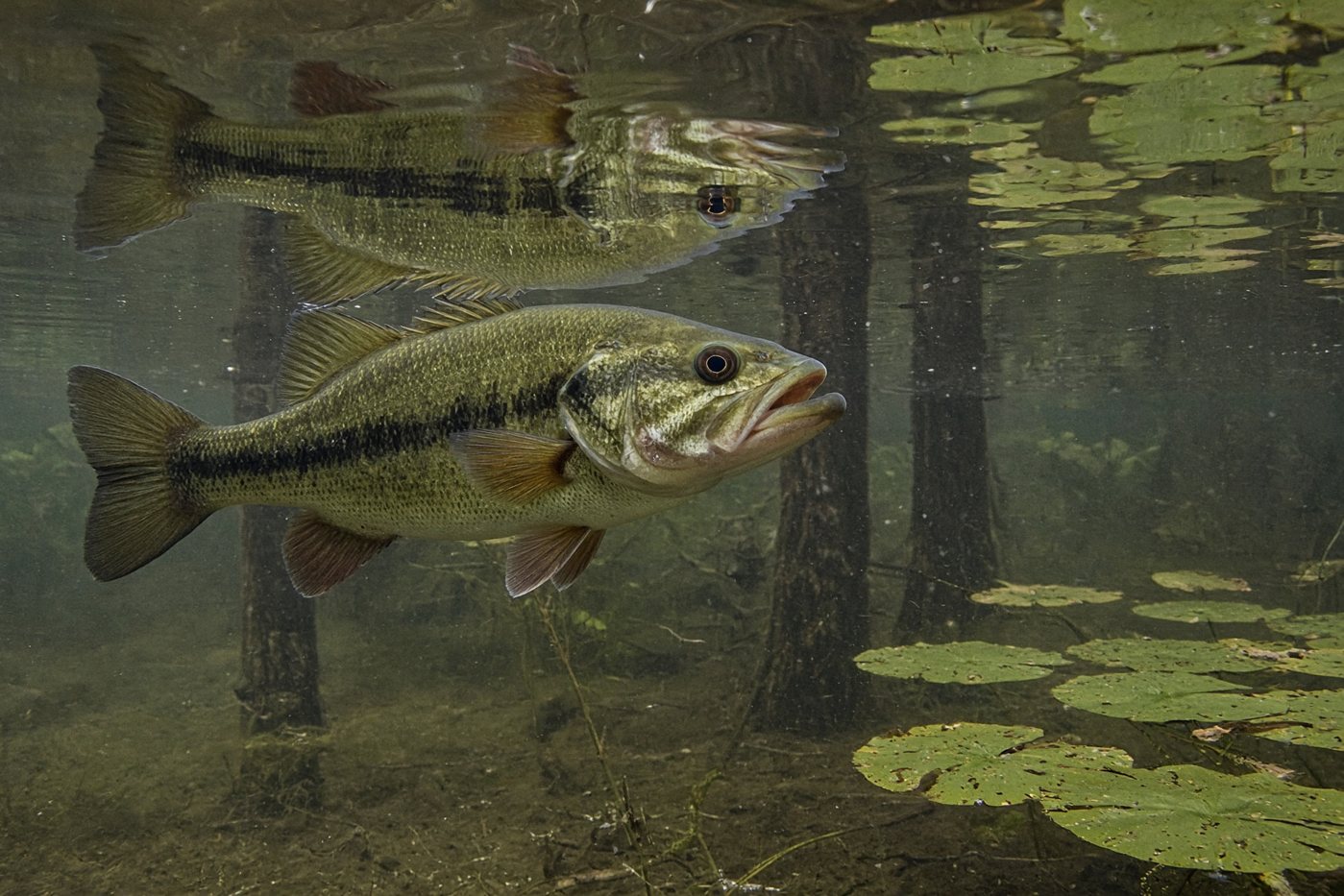
Largemouth bass
Micropterus salmoides
The large predator of the open water and the cover along the bank. An olive fish with a dark side stripe, and a mouth that reaches past the eye.
Most active in warm water, late spring through early fall
- They wait beside logs, lily pads, and the drop into deeper water, then take smaller fish, frogs, and crayfish.
- A rise or a wake along the edge on a warm evening is often a bass, not a beaver.
- Do not add more fish, bait, or aquarium stock to the pond. What is already here is the fishery the thirteen share.
Resident
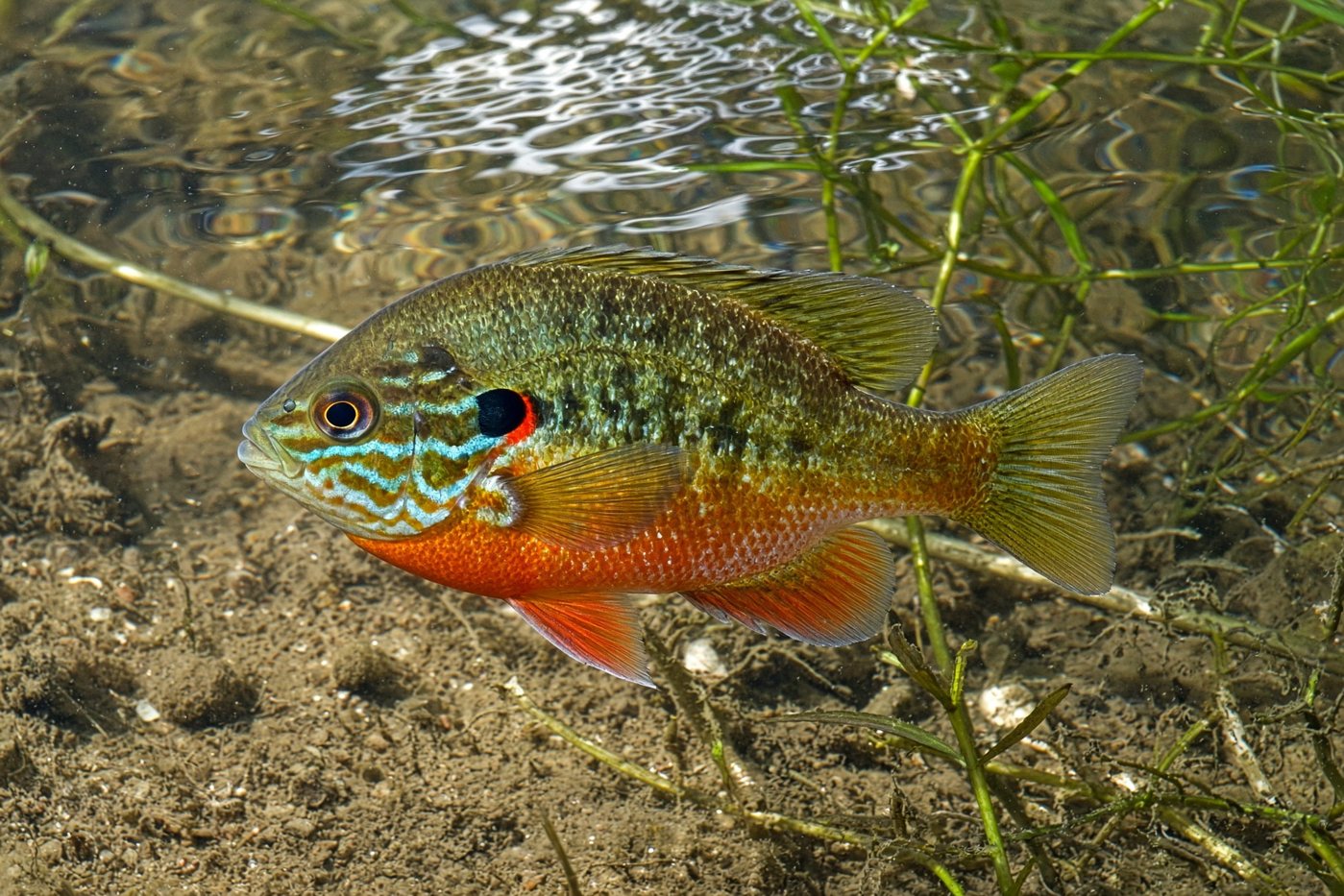
Pumpkinseed
Lepomis gibbosus
A small sunfish of the warm shallows. Bright orange below, wavy blue-green on the cheek, and a red spot on the flap of the gill cover.
Visible in the shallows; nests in late spring
- In May and June the males fan pale circular nests in shallow gravel and guard them. Those rings are nests, not something to step through.
- They eat insects, snails, and other small prey along the vegetated edge.
- A pumpkinseed is not a bass. The body is deep and round, and the fish stays small.
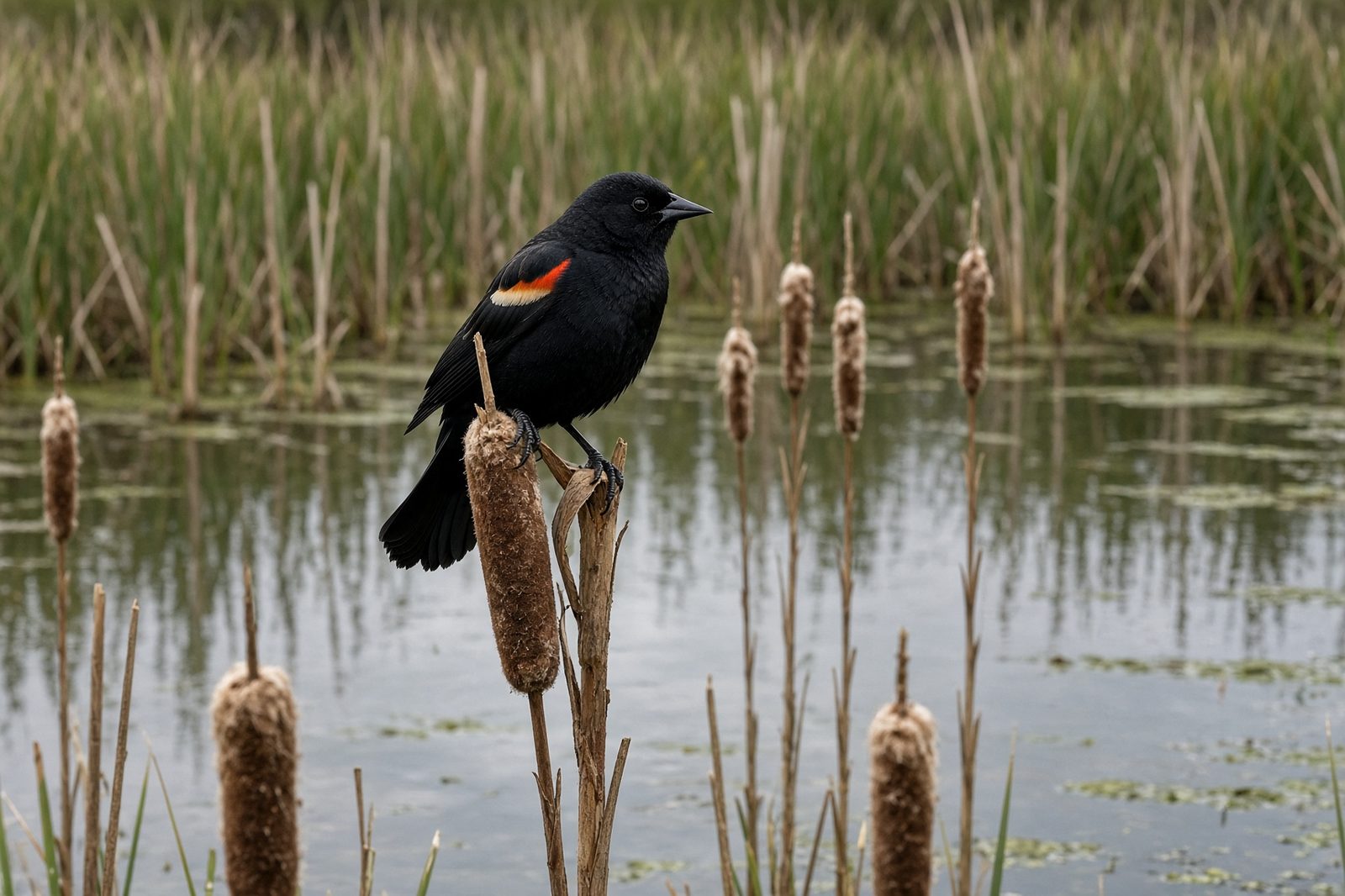
Breeding season common
Red-winged blackbird
Agelaius phoeniceus
The soundtrack of the cattail edge. Males hold marsh territories over the pond; nests are woven low in last year’s stems.
Cattail territories from March through July
- Leave cattail stands intact through nesting season.
- A pond without a redwing chorus in May is a pond that has lost too much marsh.
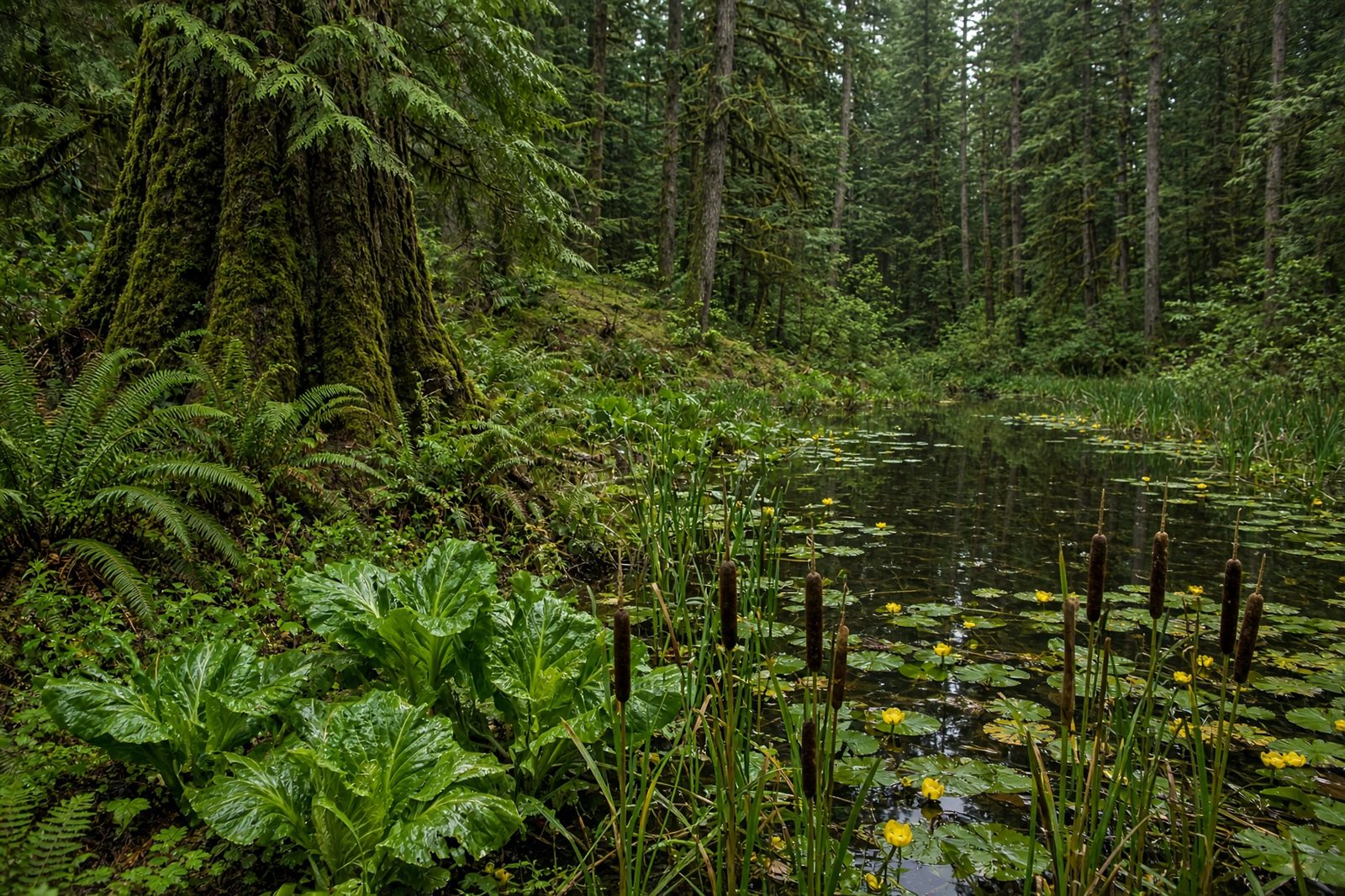
The structure of the pond
Wetland plants
Cattail, skunk cabbage, pond lily, cedar, alder
The living architecture: western red cedar and red alder on the bank, cattails and rushes in the muck, yellow pond lilies on the water, skunk cabbage in the seeps.
Skunk cabbage in March; lilies in summer; cedar year-round
- Lysichiton americanus (skunk cabbage) is a native wetland plant. It is not a problem to solve.
- Typha latifolia (broadleaf cattail) is native marsh. Watch, rather than panic, if it expands after a beaver year.
- Invasives to pull when you see them: English ivy, holly, reed canarygrass, yellow flag iris, Himalayan blackberry.
- Western red cedar (Thuja plicata) and sword fern are the forest the pond is set in. They are the reason this place feels like the Northwest.